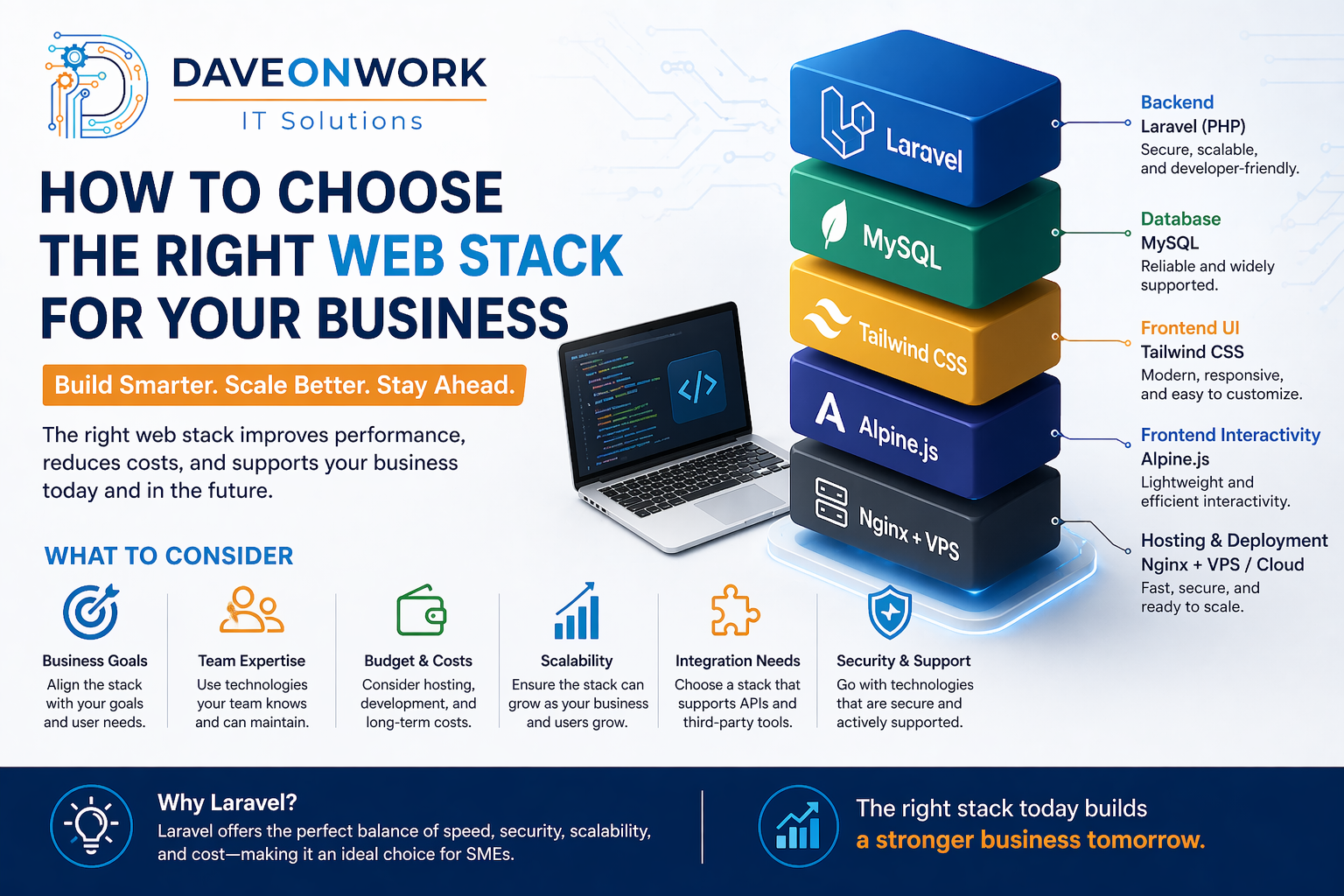
How to Choose the Right Web Stack for Your Business
Selecting the right web technology stack is one of the most critical decisions when building a system. It directly affects your development speed, system performance, scalability, security, and long-term maintenance costs.
Many businesses fall into the trap of choosing technologies based on trends or hype. However, the right approach is to focus on what works best for your specific business requirements.
Here’s a practical guide to help you choose the right web stack.
1. Start with Your Business Goals
Before choosing any technology, clearly define what you are building.
Ask yourself:
• Is it a simple website, internal system, or SaaS platform?
• How many users do you expect?
• Will it scale over time?
Why it matters:
Your goals determine whether you need a lightweight setup or a scalable architecture.
2. Evaluate Your Team’s Expertise
The best stack is the one your team can build and maintain efficiently.
Consider:
• Existing developer skills
• Learning curve of new technologies
• Availability of talent
Best practice:
Choosing a familiar stack reduces development time and long-term risks.
3. Understand the Cost Implications
Technology choices affect both initial and ongoing costs.
Include:
• Hosting and infrastructure
• Licensing (if any)
• Maintenance and support
Tip:
Open-source stacks like Laravel + MySQL can significantly reduce costs for SMEs.
4. Plan for Scalability
Your system should grow with your business.
Look for:
• Ability to handle increased traffic
• Modular and scalable architecture
• Support for caching, queues, and optimization
5. Consider Integration Requirements
Most systems today need to integrate with other tools.
Examples:
• Payment gateways
• SMS/Email services
• APIs and third-party platforms
Make sure your stack:
• Supports API-first development
• Has strong ecosystem support
6. Prioritize Security and Maintenance
Security should never be an afterthought.
Ensure:
• Regular framework updates
• Strong authentication and authorization
• Active community support
7. Why Laravel is a Strong Choice for SMEs
For many small to medium-sized businesses, a Laravel-based stack offers an excellent balance of:
✅ Fast development and clean architecture
✅ Built-in security features
✅ Scalable structure (queues, caching, APIs)
✅ Strong community and ecosystem
✅ Cost-effective (open-source)
Typical stack:
• Backend: Laravel
• Database: MySQL
• Frontend: Blade / Tailwind / Alpine.js
• Hosting: VPS or cloud (e.g., DigitalOcean, Hostinger VPS)
• Recommended Stack for Practical Use
For most business systems, a proven and stable setup includes:
• Laravel (Backend Framework)
• MySQL (Database)
• Tailwind CSS (UI Styling)
• Alpine.js or Vue (Frontend Interactivity)
• Nginx + VPS Hosting (Deployment)
This combination provides a solid foundation for performance, maintainability, and scalability.
Final Thoughts
Choosing the right web stack is not about using the newest tools—it’s about making strategic decisions that align with your business goals.
A well-chosen stack will:
• Reduce development risks
• Improve system performance
• Lower long-term costs
• Support future growth
If you're unsure, it's always best to consult with an experienced developer or IT partner to design the right architecture for your needs.